

Future Work Skills
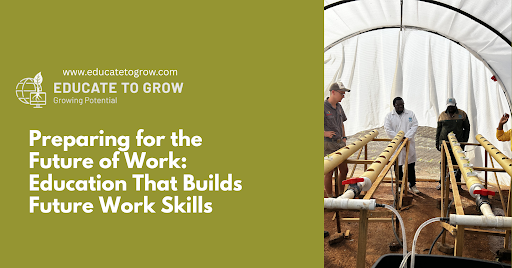
The world of work is changing rapidly. Digital technologies, artificial intelligence, automation, climate change and shifting economic conditions are transforming how organisations operate and what they expect from employees. Some occupations are evolving, new roles are emerging, and many traditional tasks are being redesigned or automated.
In this environment, education can no longer focus only on preparing people for a single occupation. It must also equip learners with the future work skills needed to adapt, solve problems, learn continuously and remain productive as industries change.
Why adaptability matters
Technical knowledge remains important, but knowledge alone is no longer enough. Employers increasingly require people who can apply what they know in unfamiliar situations, communicate effectively, use technology responsibly and adjust when circumstances change.
According to the World Economic Forum’s Future of Jobs Report, technological change is expected to reshape many workplace tasks and skills. This does not mean that people will become less important. Instead, it highlights the growing value of distinctly human capabilities such as judgement, creativity, collaboration, resilience and leadership.
Adaptability is therefore not simply the ability to accept change. It is the ability to understand change, respond constructively and continue developing. Education that builds adaptability gives learners the confidence to navigate uncertainty instead of being overwhelmed by it.
Building strong foundations
Before learners can master advanced technologies or specialised occupational skills, they need strong foundations. Literacy, numeracy and digital competence remain essential across almost every industry.
Employees must be able to interpret information, communicate clearly, work with figures and use digital tools. These abilities support everything from completing workplace reports and managing budgets to evaluating data and communicating with customers.
The OECD Learning Compass 2030 emphasises that education should help learners develop knowledge, skills, attitudes and values while encouraging them to take responsibility for their learning. This broader approach supports the development of future work skills because it prepares learners to think independently and act purposefully.
Learning how to learn
One of the most valuable abilities any person can develop is knowing how to learn. A qualification may provide entry into a career, but continuous learning helps a person remain relevant throughout that career.
Workers may need to learn new software, understand updated regulations, adopt improved production methods or move into entirely new roles. People who are curious, self-directed and willing to improve are better positioned to respond to these demands.
This is why education should encourage learners to ask questions, find reliable information, reflect on feedback and apply lessons from experience. Learning should not end when a course or qualification is completed. It should become an ongoing habit.
The International Labour Organization recognises skills development and lifelong learning as important foundations for employability, productivity and access to decent work.
Connecting education with real-world practice
Education becomes more meaningful when learners can see how knowledge is applied. Practical activities, workplace simulations, projects, case studies and work-integrated learning help connect theory with real challenges.
A learner may understand a concept in principle but still struggle to apply it in a workplace. Practical learning develops competence, confidence and sound judgement. It also teaches learners how to work with others, meet deadlines, manage limited resources and take responsibility for results.
Employers, educators and community organisations all have a role to play in strengthening this connection. Regular engagement with industry can help education providers understand changing skills needs and ensure that programmes remain relevant.
Balancing digital and human capabilities
Digital literacy is now part of employability. Learners should understand how to use digital platforms, collaborate online, manage information, protect personal data and engage responsibly with artificial intelligence.
However, technology should complement rather than replace human capability. A person may know how to operate a digital tool but still need critical thinking to assess whether its output is accurate, ethical or appropriate.
The strongest education models therefore combine technical competence with human skills. Communication, empathy, teamwork, creativity and ethical decision-making are central future work skills because they help people use technology responsibly and work effectively with others.
Developing problem-solvers
Workplaces need people who can identify problems, examine possible causes and contribute to practical solutions. Problem-solving is developed when learners are encouraged to think, investigate and experiment instead of merely memorising information.
Project-based learning can be particularly effective. It gives learners opportunities to plan, make decisions, test ideas, learn from mistakes and improve their approach. These experiences also build resilience by showing that setbacks can become valuable learning opportunities.
Entrepreneurial thinking is equally important. Not every learner will start a business, but everyone can benefit from learning to recognise opportunities, manage resources, calculate risks and create value. These abilities can support employment, self-employment and community development.
Making adaptable education more accessible
Preparing people for the future of work also requires flexible access to education. Many learners must balance studies with work, family responsibilities, transport limitations or financial pressures.
Online learning, blended programmes, short courses and modular training can make education more accessible. However, flexibility must still be supported by clear guidance, relevant content, learner support and opportunities to practise skills.
UNESCO highlights the importance of education and training systems that respond to changing economies while supporting inclusive and sustainable development. Accessible education can help more people develop future work skills, regardless of where they live or where their learning journey began.
Conclusion: Education that enables people to grow
Preparing for the future of work is not about predicting every new occupation. It is about developing people who can think critically, learn continuously, work with others and adapt their knowledge to new situations.
Educate To Grow NPC supports this goal by helping expand access to relevant education, skills development and opportunities that enable individuals and communities to participate more meaningfully in the economy. Through education that connects knowledge with practical capability, the organisation contributes to developing the future work skills people need to build resilient livelihoods and respond confidently to change.
Learn more about its work and development initiatives at www.educatetogrow.com.