

Rural Skills Development
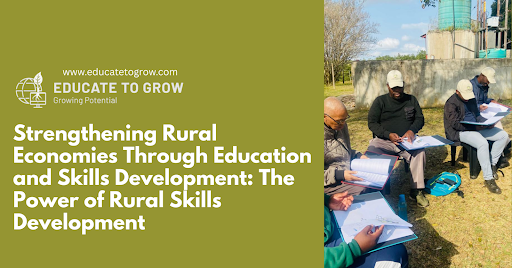
Across the globe, rural communities are the backbone of food production, natural resource management and cultural heritage. Yet many of these communities face persistent challenges, including unemployment, limited access to quality education, underdeveloped infrastructure and restricted access to markets. At the heart of long-term solutions lies Rural Skills Development — a strategic investment in people that unlocks economic resilience, innovation and sustainable growth.
Education and skill development are not simply social interventions; they are economic catalysts. When rural populations gain access to relevant, high-quality training, they become active contributors to local value chains, entrepreneurs within their communities and drivers of inclusive economic transformation.
Why Education Is Central to Rural Economic Growth
Strong rural economies depend on capable people. Whether in agriculture, agro-processing, tourism, renewable energy or small enterprise development, success requires knowledge, technical competence and business acumen.
Access to structured training programmes, accredited qualifications and short skills courses empowers individuals to:
- Increase productivity in farming and rural enterprises
- Adopt modern technologies and sustainable practices
- Improve financial management and business planning
- Access formal markets and funding opportunities
- Create employment within their own communities
According to global development frameworks such as the World Bank and the Food and Agriculture Organisation, rural education and vocational training significantly contribute to poverty reduction and food security. These institutions consistently emphasise that Rural Skills Development is one of the most effective tools for strengthening rural economies.
Linking Skills to Local Economic Value Chains
For rural education to be effective, it must be aligned with real economic opportunities. Generic training that does not reflect local needs rarely produces a lasting impact. Instead, programmes should connect learners directly to local value chains — from production to processing, packaging, marketing and distribution.
For example:
- Farmers trained in sustainable crop production can improve yields and quality.
- Youth trained in agro-processing can add value to local produce.
- Entrepreneurs trained in business management can formalise operations and access finance.
- Technicians trained in renewable energy systems can maintain rural solar installations.
When skills training supports the entire “farm-to-market” ecosystem, rural areas move beyond subsistence activities towards structured, income-generating enterprises. This integrated approach strengthens household incomes and stimulates local economies.
Youth Employment and Rural Retention
One of the greatest threats to rural sustainability is youth migration to urban centres. Many young people leave their communities due to limited employment prospects. However, when rural education includes entrepreneurship, digital literacy and market-oriented skills, young people begin to see opportunity at home.
Rural Skills Development can transform rural youth from job seekers into job creators. By equipping them with practical and entrepreneurial competencies, rural communities retain talent and build generational continuity in local industries.
Digital learning platforms and blended training models also expand access to education in remote areas. Online courses, mobile-based learning and community training hubs allow rural learners to access quality instruction without relocating.
Empowering Women in Rural Economies
Women play a critical role in rural economies, particularly in agriculture and informal trade. Yet they often face limited access to formal education, finance and land ownership. Skill development initiatives that deliberately include women help close this gap.
Training in financial literacy, enterprise management and technical skills enables women to:
- Formalise small businesses
- Improve productivity in agricultural activities
- Access microfinance or cooperative funding
- Participate in leadership and governance structures
When women are economically empowered, household stability improves, community wellbeing increases and intergenerational poverty declines. Inclusive Rural Skills Development is therefore not only an economic strategy but also a social justice imperative.
Climate-Smart and Sustainable Skills
Rural economies are deeply connected to natural resources. As climate change intensifies, rural communities must adopt sustainable practices to remain resilient. Education plays a crucial role in equipping farmers and rural entrepreneurs with climate-smart techniques.
Training in areas such as soil conservation, water management, regenerative agriculture and renewable energy helps communities:
- Reduce environmental degradation
- Increase resilience to droughts and floods
- Improve long-term productivity
- Lower operational costs
Sustainability-focused training ensures that economic growth does not come at the expense of future generations. Rural Skills Development must therefore integrate environmental stewardship alongside economic advancement.
Strengthening Local Institutions and Partnerships
Education initiatives achieve greater impact when supported by strong institutions and partnerships. Collaboration between training providers, private sector companies, cooperatives, local government bodies and development organisations ensures that programmes remain relevant and demand-driven.
Public-private partnerships can facilitate:
- Internship and apprenticeship opportunities
- Market access for rural producers
- Equipment and infrastructure support
- Co-funded training initiatives
When stakeholders align around a shared rural development strategy, skill development becomes a coordinated effort rather than an isolated intervention.
The Multiplier Effect of Skills
Investing in rural education creates a multiplier effect. A single trained farmer can improve yields, employ labourers and stimulate input supply businesses. A trained agro-processor can create jobs, reduce post-harvest losses and supply regional retailers. A skilled entrepreneur can formalise operations, contribute taxes and inspire others.
This ripple effect strengthens local economies from the ground up. Instead of relying solely on external aid or urban migration, rural communities build internal capacity and resilience.
The long-term sustainability of rural economies depends on continuous learning. As markets evolve and technologies advance, ongoing upskilling ensures competitiveness and adaptability.
Building Stronger Rural Futures
Strengthening rural economies is not achieved through infrastructure alone. Roads, irrigation and electricity matter — but without human capacity, infrastructure remains underutilised. Education transforms infrastructure into opportunity.
Strategic, inclusive and market-aligned Rural Skills Development provides communities with the tools to innovate, diversify income streams and withstand economic shocks. It creates confident entrepreneurs, capable technicians and resilient farmers who drive local prosperity.
In conclusion, sustainable rural transformation depends on coordinated investment in education, skills training and inclusive access to opportunity. Organisations such as Educate To Grow NPC play a vital role in facilitating access to quality education and funding pathways that empower rural learners. By supporting structured learning initiatives and partnerships, they contribute meaningfully to stronger rural economies and long-term community resilience. For more information on programmes and initiatives that support rural transformation, visit https://www.educatetogrow.com/ and explore how education can unlock opportunity across rural communities.